Proof / Faster, Better Decisions
A living lane model. A smarter next decision.
A U.S. pharma manufacturer connects shipment performance to qualification, turning static assessments into a continuous learning process.
Illustrative, anonymized story. Customer attribution and results pending approval.

Static plans. Disconnected outcomes. Every shipment informs the next plan.
What changes
01
Current lane context
02
Active risk mitigation
03
Learning that compounds
The starting point
The plan stopped learning after qualification.
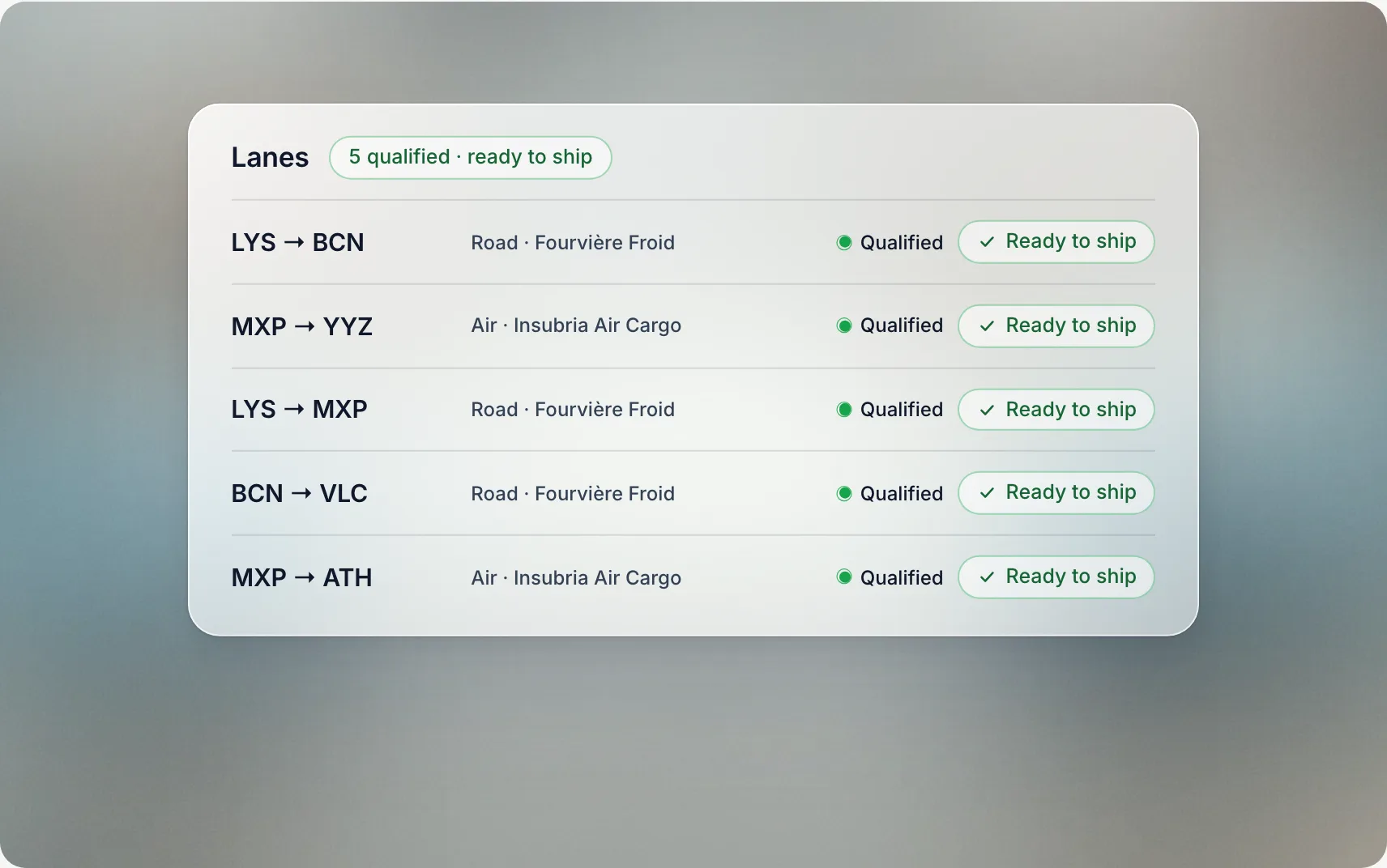
For a U.S. pharma manufacturer, lane risk assessments and SOPs captured what the network was expected to do, but rarely reflected what shipments were actually doing. Performance data arrived through report requests and circulated separately from planning. Each requalification cycle risked becoming another exercise in rebuilding an assessment instead of improving an existing model with new evidence.
The change
Lane risk assessment gained real shipment context.
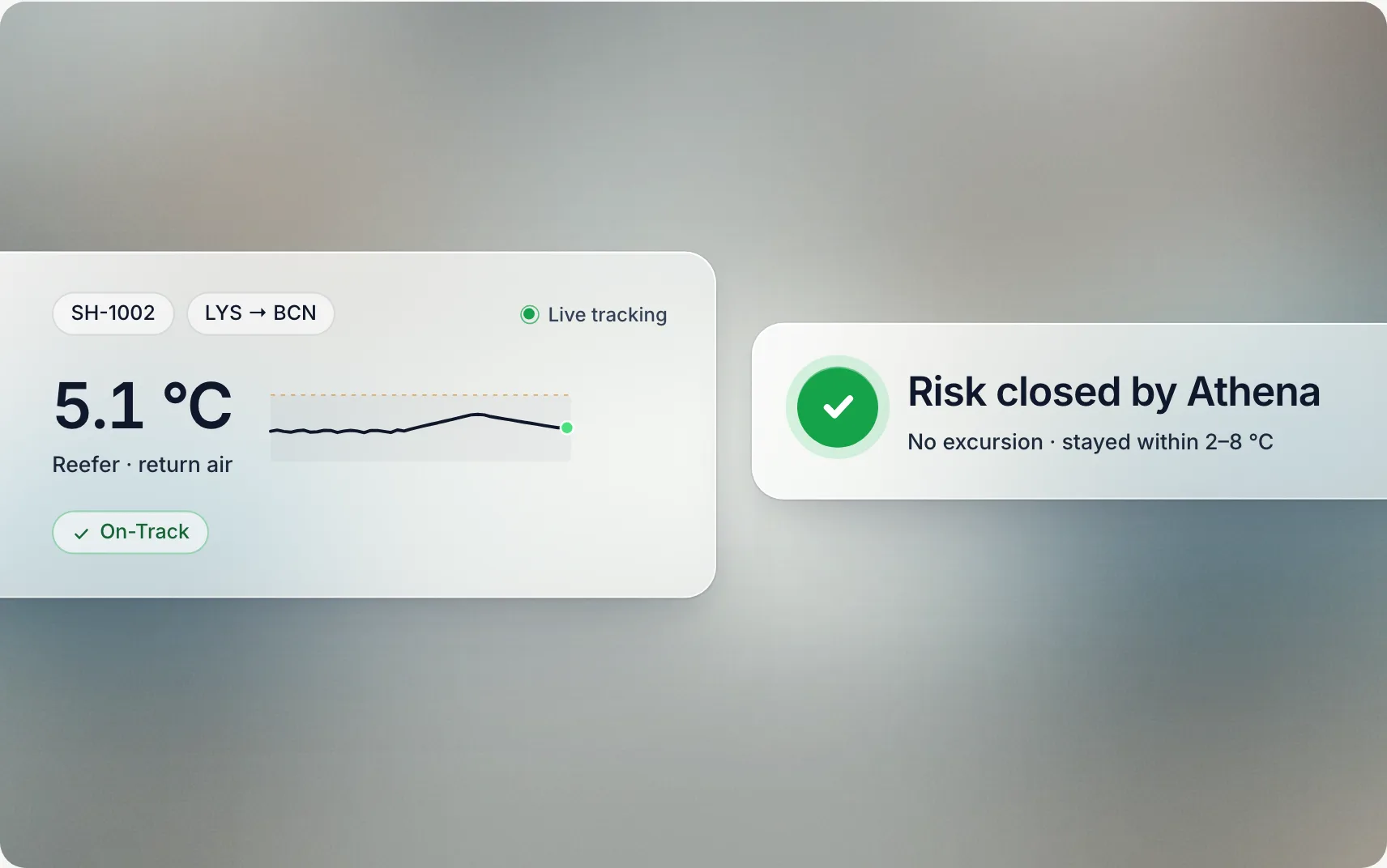
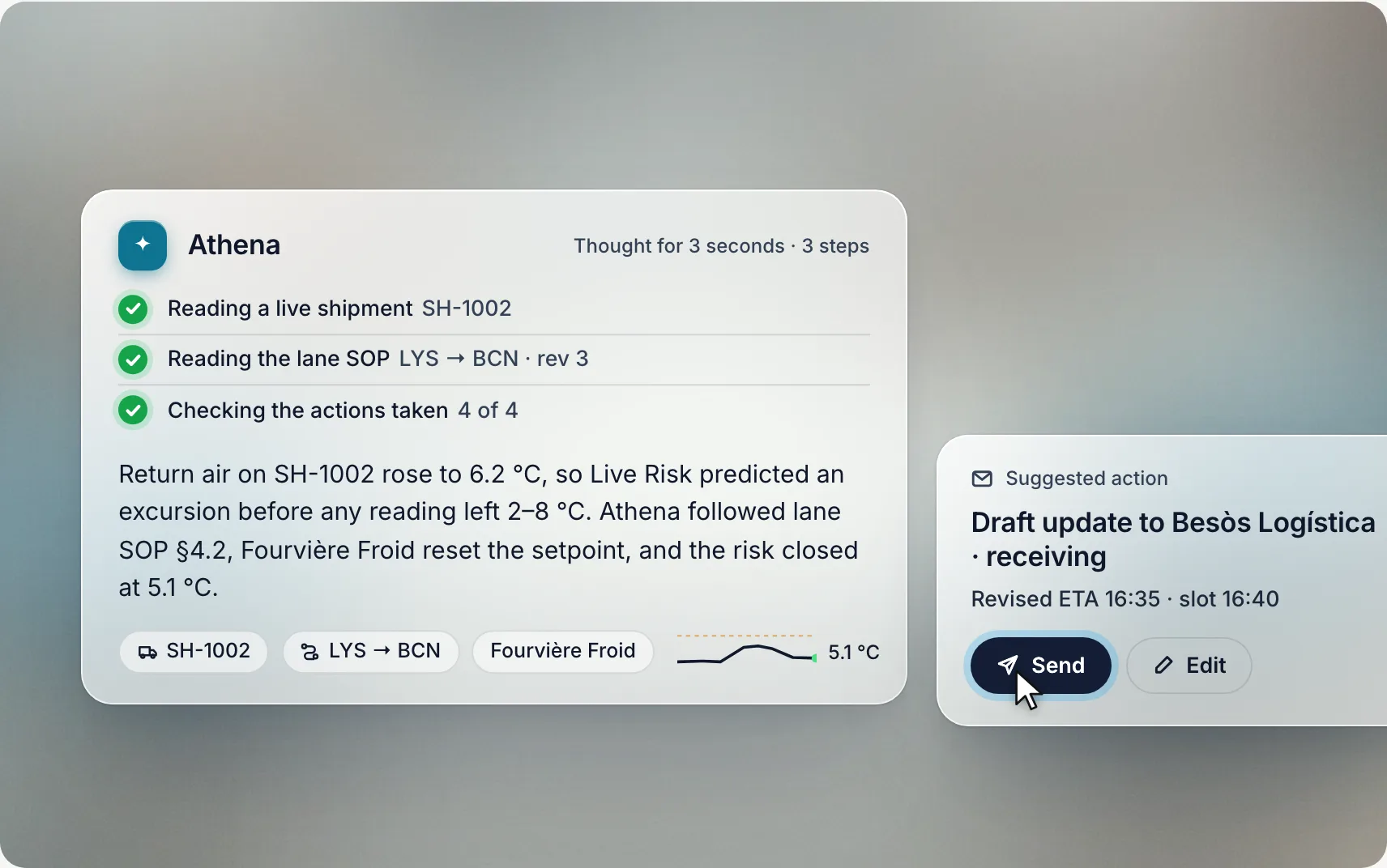
PAXAFE connected live shipment outcomes to the lane requirements and risk configurations held in the Agent Harness. Lane Intelligence and the Lane Risk Agent could assess performance against approved context, identify drift, and bring relevant evidence back to the planning team. Insights turned that performance into usable summaries, giving teams a clearer basis for deciding which lane or provider needed attention.
How the change happens
1Ingest, consolidate structured and unstructured shipment and lane data as it happened.
2Evaluate, contextualize behavior against SOP thresholds and risk configurations in the Agent Harness.
3Identify & Prescribe, pinpoint the lanes actually at risk, and recommend the next action from their own SOPs.
4Learn, every shipment feeds back into the next lane qualification (Plan → Ship → Release → Learn).
The outcome
Each shipment improved the next assessment.
The feedback loop gave planning a continuing evidence base instead of another static report. Teams could revisit qualification with the history of the lane in view, investigate changing performance, and evaluate the next action against their own SOPs. The result was a more defensible path to operational improvement, with actual shipment experience informing the next planning decision.
The evidence behind the change
◎
Qualified context
SOP thresholds and lane requirements define the baseline.
↗
Performance assessed
Real shipment evidence makes changing risk visible.
↻
Learning returned
Outcomes feed the next qualification and planning decision.


See it on your data
Make this your next chapter.
Explore what a connected cold chain record could change for your team.